


The Engine of Engagement: Examining the Key Drivers of CRM Software Market Growth
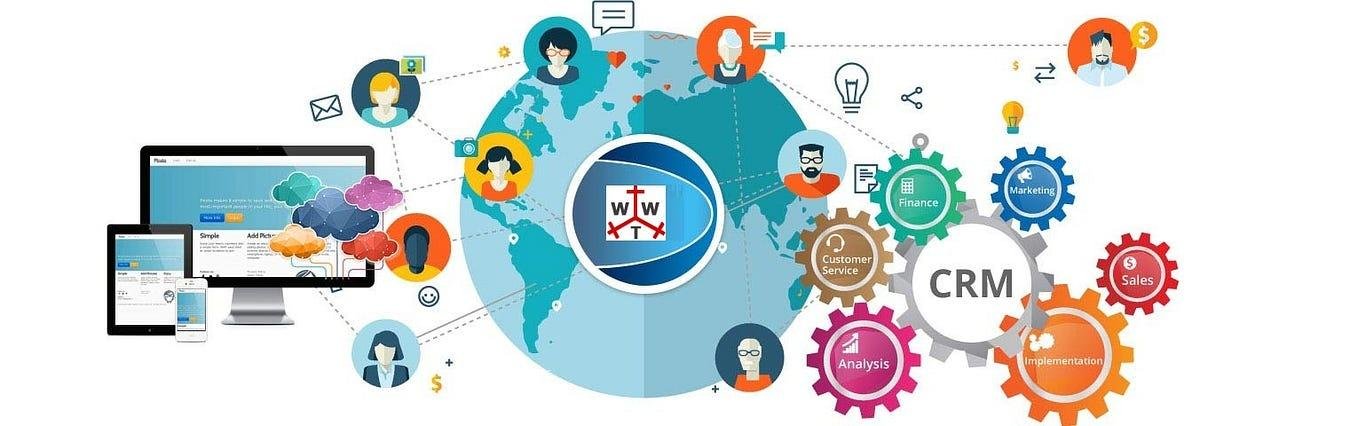
The CRM software market is experiencing a period of powerful and sustained growth, fueled by a set of deep-seated business imperatives that have made effective customer relationship management an essential component of corporate strategy. This is not growth driven by a temporary trend, but by a fundamental and permanent shift in the nature of competition itself. The single most important driver is the elevation of Customer Experience (CX) to the primary battlefield for competitive differentiation. A deep analysis of the Crm Software Market Growth shows that in today's mature markets, products and services are often commoditized, and price is no longer the only factor in a consumer's decision. Instead, businesses are increasingly competing on the quality of the end-to-end experience they provide. A CRM system is the core operational backbone required to deliver a superior CX. It enables the personalization, consistency, and responsiveness that modern customers demand. As more companies realize that investing in customer relationships yields a higher return than competing on price alone, the demand for sophisticated CRM tools to orchestrate that experience continues to surge, making it a powerful and enduring growth engine.
A second major driver of market growth is the broader, all-encompassing wave of digital transformation sweeping across every industry. As organizations digitize their operations, they generate an enormous amount of customer data from a multitude of touchpoints—websites, mobile apps, social media, and IoT devices. A CRM system is the central repository needed to capture, unify, and make sense of this data deluge. It acts as the "system of record" for the customer in a digital-first enterprise. The shift to remote and hybrid work models has also been a significant catalyst. With sales and service teams distributed geographically, a cloud-based CRM system becomes the non-negotiable single source of truth that ensures everyone is working with the same real-time information, regardless of their location. This role as a foundational pillar of both digital transformation and modern work practices ensures that investment in CRM grows in lockstep with these larger macro trends, cementing its position as a core component of the modern enterprise technology stack.
The economics of the subscription economy provide another powerful, self-reinforcing driver of CRM market growth. As more businesses, from software and media to consumer goods, shift from a one-time transactional sales model to a recurring revenue subscription model, the focus of the business fundamentally changes from customer acquisition to customer retention. In a subscription model, long-term success is entirely dependent on minimizing customer churn and maximizing customer lifetime value. This makes the "relationship" part of Customer Relationship Management absolutely critical. A CRM system is the essential tool for managing this ongoing relationship. It helps businesses to onboard new subscribers effectively, monitor their engagement and health scores, identify customers who are at risk of churning, and proactively engage them with targeted communication and support. As the global economy continues its inexorable shift towards subscription--based models, the demand for CRM software as the core engine for managing these recurring relationships will only continue to accelerate.
Finally, the increasing demand for data-driven decision-making across all business functions is a key driver of growth. In today's competitive environment, decisions based on gut feelings and intuition are no longer sufficient. Leaders demand real-time data and analytics to guide their strategies. A CRM platform is a rich source of this data, providing a wealth of information on sales performance, marketing campaign effectiveness, and customer service efficiency. Modern CRM systems come with powerful, built-in analytics and dashboarding capabilities that allow managers to track key performance indicators (KPIs), identify trends, and pinpoint areas for improvement. The infusion of artificial intelligence into these platforms further enhances this capability, providing predictive insights that can guide strategic planning. This ability to transform raw customer interaction data into actionable business intelligence is a critical value proposition, driving adoption among companies that seek to build a more agile, responsive, and data-literate organizational culture.
Explore Our Latest Trending Reports:

 English
 Arabic
 French
 Spanish
 Portuguese
 Deutsch
 Turkish
 Dutch
Dutch
 Russian
 Romaian
 Portuguese (Brazil)
 Greek
Greek
